What You're Actually Paying For: An Honest Price Guide to Your First Body Mold
Most first-time buyers ask 'how cheap can I go?' — and it's the wrong question. In this category the cheapest piece is often the most expensive one you'll own, because a mold that degrades in months costs more per use than the option you skipped. Here's what your money actually buys, tier by tier.
October 23, 2026 · 6 min read · 1195 words
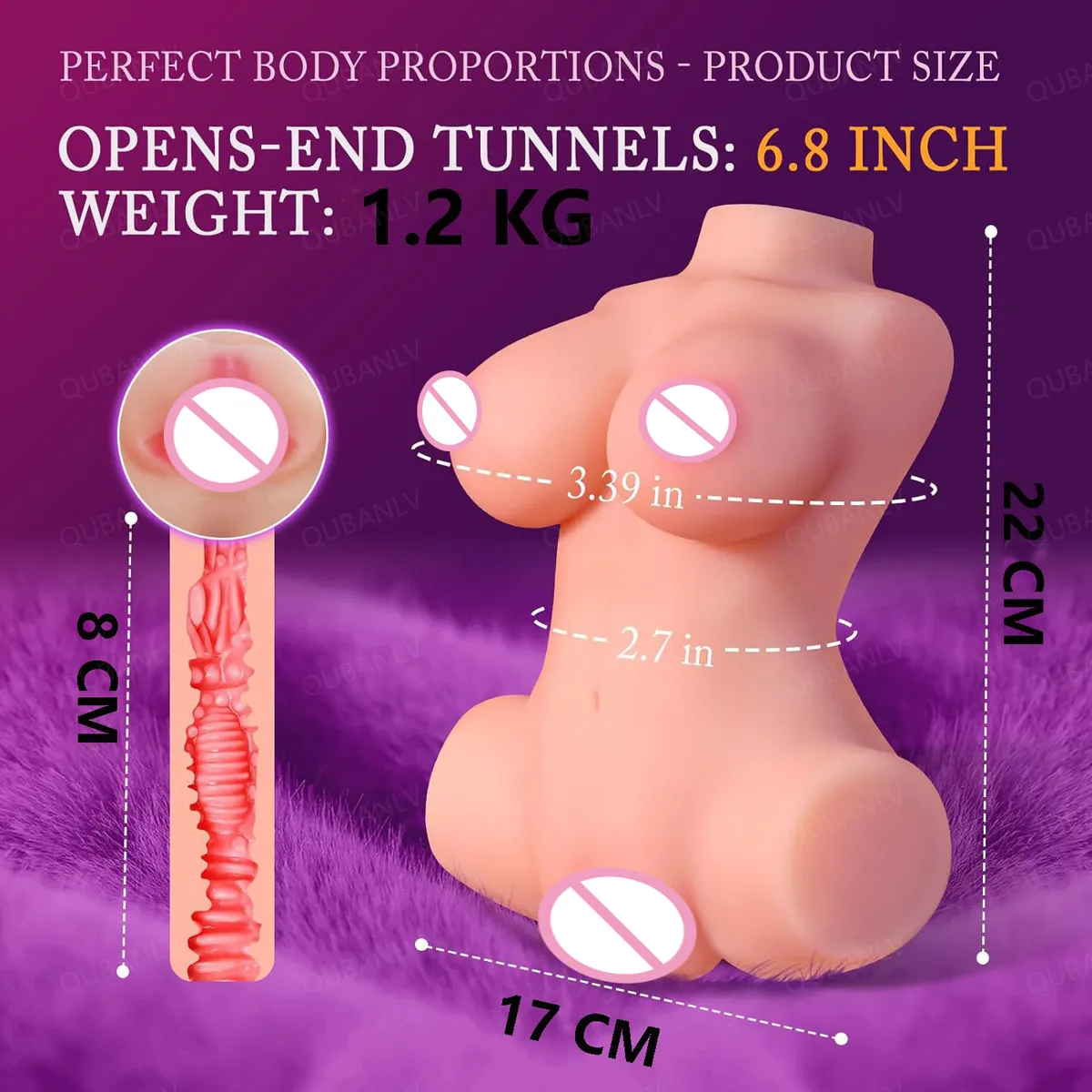
Here's a question almost every first-time buyer asks in exactly the wrong order: "How cheap can I go?" It feels like the sensible question — you don't want to overspend on something you're still unsure about. But it's backwards. The question that actually protects your money is a different one: What am I paying for, and what does cutting that particular corner cost me later?
Because here's the thing nobody puts in the product listing: in this category, the cheapest item is frequently the most expensive one you'll ever buy. Not because cheap materials are dishonest — they're usually perfectly honest about what they are — but because a mold that degrades in months, needs replacing, or feels wrong enough that you quietly stop using it, has cost you far more per use than the "expensive" option you skipped. Value isn't the lowest price. It's the lowest cost over the life of the thing.
What actually drives the price
Strip away the branding and the photography, and the price of a body mold comes down to a short list of real, physical things. Understanding these four is the entire skill of reading a price tag.
The material blend — and especially the oil. TPE (thermoplastic elastomer) isn't one substance. It's a polymer matrix loaded with mineral oil, and that oil is the entire reason the material feels soft instead of like a rubber tyre. The ratio and quality of that oil is one of the biggest silent cost drivers. More oil means more softness and realism, but also more care — the trade-off we unpacked in why TPE is porous. Cheaper blends cut the oil, which is exactly why a budget mold can feel firm, faintly plastic, and prone to cracking sooner. You are, quite literally, paying for softness, and softness is oil.
The internal structure. A mold with an internal armature — the skeleton that lets it hold a pose and keeps the weight from flopping around — costs more to produce than a simple solid cast. This is one of the clearest price cutoffs in the whole category. Below a certain point you're getting a solid, pose-less piece. That's fine for some uses, but it ages differently and is harder to position and store.
The casting and finishing. This is where the visible difference lives: the sharpness of surface detail, the seams, how cleanly the piece is trimmed and finished. A mold that's been hand-finished costs more than one pulled straight from a rough form. It's the difference between "looks right from across the room" and "looks right up close."
Size and weight. More material is more money, full stop. A larger, heavier piece uses more TPE, more oil, and more labor. This is why the same type of product spans such a wide price range — a 0.35 kg torso and a 3 kg torso aren't the same product with different price tags. They're different amounts of a material you're buying by weight.
The three tiers, honestly described
It helps to think in three bands — not rigid rules, but a map of what your money is doing at each level.
The budget band. Small, simple, solid-cast pieces — light torsos, basic shapes, straightforward finishing. What you get: an affordable way to find out whether this category is for you at all, with very low financial risk. What you give up: softness, detail, durability, and usually the internal structure. These pieces are honest; they just age faster and feel firmer. The smart reason to buy here is as a low-stakes trial, not as the thing you expect to keep for years. If you're unsure about size before you commit, our guide to choosing your first torso's weight will keep you from overcommitting to something you may not actually like.
The mid band. This is the sweet spot for most first purchases. You get a properly oil-loaded TPE blend, a real internal structure, and decent finishing. The softness is noticeably better, the piece holds its shape, and it'll last with the routine care we describe in how to clean TPE body molds. You're no longer paying to find out whether you like the category — you're paying for the category done properly. Most of the regret in this hobby comes from skipping this band on the first go: buying either too cheap (and being disappointed) or too rich (and being overwhelmed).
The premium band. Above a certain price, you're paying for larger scale, more elaborate detail, and sometimes brand and name — and here's the honest part: the returns start to shrink. A mid-band piece feels dramatically better than a budget one. A premium piece feels somewhat better than a mid one, not dramatically. If you know exactly what you want and this is a long-term purchase, it can absolutely be worth it. If this is your first piece, the premium band is usually where people overspend on nuances they can't yet tell the difference between.
Where people overspend (and underspend)
The two most common money mistakes in this category are mirror images of each other.
Overspending on features you can't feel yet. Premium "upgrades" — extra softness levels, particular internal textures, elaborate detail — are real, but a first-time buyer has no reference point to judge them against. You can't appreciate the difference between "very soft" and "extremely soft" until you've lived with both. Spending top dollar on nuance before you have a baseline is like building a wine cellar before you've decided whether you like red or white.
Underspending on the one thing that matters: the material. If you're going to cut one corner, don't cut it on the oil. Cheaper material means a firmer feel and a shorter life — the exact two things that determine whether you'll keep using the piece or let it gather dust. Firmness is the first thing you'll notice, and it's the one thing a budget mold can't hide. (For what it's worth, a faint oiliness on a brand-new TPE is a sign you got the real blend, not a defect — more on that in why new TPE feels oily.)
A simple rule for your first purchase
If you take one sentence away, make it this one: buy in the mid band, spend on the material, and treat the budget band as a trial, not a final answer.
Start by answering a single honest question — is this a test, or a purchase? If you genuinely aren't sure whether the category is for you, the cheapest reasonable piece is a perfectly rational first step. But if you already know you want this, skip the budget band and go straight to the middle: a proper oil-loaded TPE, an internal structure, and a size you've actually thought about rather than guessed.
That's it. Not the biggest, not the most expensive, not the most "featured." Just the band where the material is real, the softness is honest, and the piece is still what you bought six months later. That's what value actually means in this category — not the lowest price, but the lowest cost per use over the life of the thing.
Keep reading