What Weight Should Your First Torso Be?
The most common regret is buying too heavy. A practical guide to matching size and weight to how you will actually use and store it.
October 15, 2026 · 6 min read · 1048 words
There is a predictable pattern to first purchases. Someone reads a spec sheet, sees a weight figure that seems abstract, and orders the largest thing in their budget. It arrives. Moving it turns out to require two hands, a clear floor, and a decision. Six weeks later it lives in a cupboard, and a smaller, cheaper piece used three times a week would have been the better buy.
Weight is the least glamorous specification on any product page and by far the most predictive of whether you will actually use the thing. This is how to think about it before the box arrives.
Three weight bands
For practical purposes torsos fall into three ranges, and the experience in each is genuinely different rather than a matter of degree.
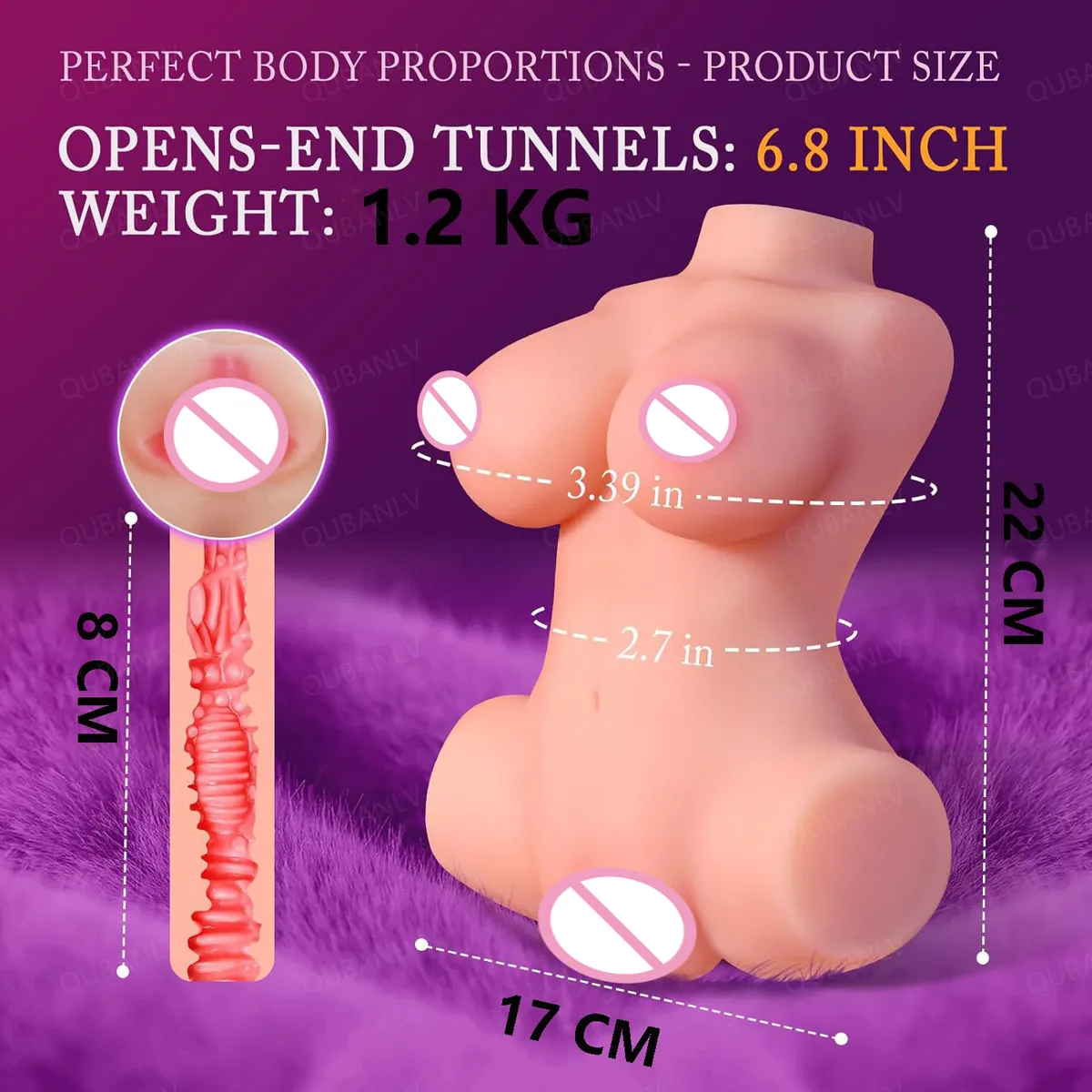
Under 3kg — one hand. Pocket-sized pieces, small hip and breast molds, and the compact end of torsos. Examples in stock at the moment include the TPE 1.5 kg Torso and the TPE 1.3 kg Torso.
This band wins on almost everything except scale. It lifts with one hand, disappears into a drawer, dries in an hour, and takes maybe ten minutes to clean. Storage is not a consideration because there is nothing to plan around. If discretion matters — shared flat, family visits, limited space — this is the honest answer, and the compromise is smaller than most people expect.
3–10kg — two hands, no planning. A meaningful step up in presence without becoming a logistics problem. Most of the torso range sits here, including pieces like the TPE 1.9 kg Torso (A) at the light end through larger bust and hip forms approaching 10kg with full interior structure.
This is the sweet spot for most people. Heavy enough to have real weight and stay put during use, light enough to lift from a shelf one-handed and carry to the sink without clearing a route first. Cleaning takes about twenty minutes. Drying takes two or three hours. If you are unsure which band to buy, buy here.
Over 10kg — genuinely heavy. Full-scale figures, half-body forms, and substantial leg forms to 28kg and beyond. These are not "slightly bigger", they are a different category of ownership.
A 20kg piece needs both hands and a clear path from wherever it lives to wherever you clean it. A 30kg one usually needs a plan, and a 40kg one is difficult for a single person to move safely at all. That does not make them the wrong purchase — plenty of people prefer exactly this and accept the overhead. It does mean you should decide knowingly, having thought about where it will live, rather than discovering the problem on delivery day.
The two questions that settle it
Forget preference for a moment and answer these concretely:
Where will it live, and how far is that from a sink? Walk the route. If it involves stairs, a narrow hallway, or lifting over anything, subtract meaningfully from your weight budget. Cleaning is the recurring task, not use, and every kilogram makes it more of an event.
How much setup are you willing to do each time? Be honest. Ten minutes of retrieval and positioning is manageable for most people. Thirty minutes is not, and any piece requiring thirty minutes will gradually get used less. This is the single strongest predictor of buyer's remorse in this category, and it is entirely about your tolerance rather than the product.
What the spec sheet does not tell you
Distribution matters more than total. A 12kg piece with weight concentrated low feels more stable than a 12kg piece with weight high up, even though the number is identical. Denser foam-core construction also changes the character considerably — two pieces at the same weight can feel quite different under the hand. Nothing short of handling it resolves this, which is a reasonable argument for buying moderately before buying large.
Weight is not quality. A heavier piece is not better made than a lighter one. Some of the most expensive constructions use advanced foam coring specifically to reduce weight while keeping dimension, so going heavier can genuinely mean going less sophisticated. Compare materials and build rather than assuming mass means quality.
Shipping weight differs from product weight. Expect the carton to be several kilograms heavier with protective packaging, and expect it to be large. Worth knowing if delivery requires you to be home, or if you are considering shipping to an address where the parcel's arrival is not something you want noted. Our packing is deliberately unmarked, which covers that concern for most people — explained in what actually arrives.
If this is genuinely your first purchase
Our recommendation, having watched this pattern repeat: start in the 1–3kg band. Not because larger pieces are worse, but because you do not yet know what you value, and the cost of finding out at $60 is lower than finding out at $600.
The specific things worth feeling for yourself before spending more:
- Whether you prefer soft TPE or firmer silicone — a firm preference here redirects every future purchase
- Whether scale matters to you at all, which is genuinely not predictable from photographs
- How much the cleanup bothers you, which is the most common reason pieces end up unused
Someone who starts small and then buys well makes two purchases. Someone who starts large and guesses wrong has one expensive object in a cupboard. Both spend similar amounts; the outcomes are very different.
When you do step up, the jump from 3kg to 10kg is a much smaller psychological adjustment than 3kg to 30kg, and it lands you in a range that stays usable.
Starting points in stock
Three reasonable entry points, depending on which direction appeals:
- [TPE 1.5 kg Torso](/products/tpe-1-5-kg-torso) — the low-commitment option. Small enough to forget about until you want it.
- [TPE 1.3 kg Torso](/products/tpe-1-3-kg-torso) — similar weight, different proportions.
- [TPE 1.9 kg Torso (A)](/products/tpe-1-9-kg-torso-a) — a step toward the mid-range without committing to it.
All three are TPE, which is the right material for a first piece at this size. The material comparison is set out in TPE versus silicone, and care requirements — worth reading before rather than after purchase — are in the cleaning guide.
Referenced in this guide
Keep reading